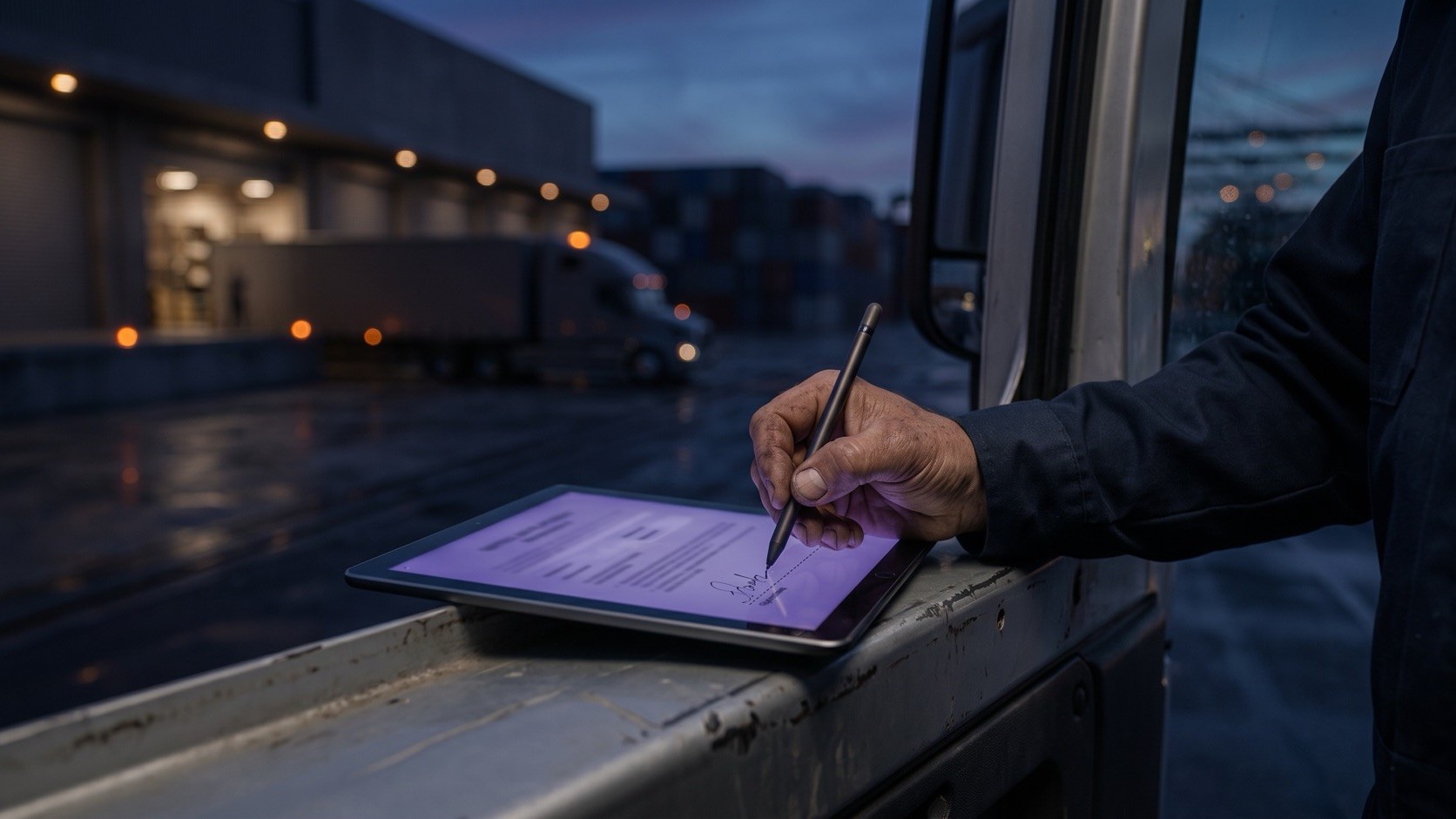
Full truckload shipping, shortened to FTL or TL, means one shipper's freight has the whole trailer. The truck picks up at the origin and drives to the destination without stopping at terminals to load or unload other freight.
You can book a full truckload even if the freight does not fill the trailer. What you are paying for is the dedicated truck.
When FTL makes sense
The shipment is large. Roughly ten pallets or more, or enough weight that a shared trailer no longer saves money.
Timing matters. The truck goes straight to the destination, so transit is faster and easier to predict.
The freight is fragile or high in value. It is loaded once and unloaded once, which means less handling.
The load needs the whole trailer for another reason. Temperature control, a dedicated flatbed, or a shipper that does not want its goods mixed with others.
FTL, LTL and partial truckload
Full truckload (FTL) | Less than truckload (LTL) | Partial truckload | |
|---|---|---|---|
Trailer | One shipper has all of it | Shared with many shippers | Shared with a few shippers |
Typical size | About ten pallets or more | One to six pallets | Six to eighteen pallets |
Handling | Loaded once, unloaded once | Moved between terminals several times | Usually stays on the same truck |
Transit | Direct | Slower, depends on the terminal network | Close to direct |
How it is priced | Per mile or a flat rate for the truck | By weight, freight class and distance | By the space and weight used |
Freight class needed | No | Yes | Usually not |
For LTL you need a freight class. Our free freight class calculator works it out from the dimensions and weight. To see how much trailer floor a shipment takes, use the linear feet calculator.
Equipment types
Dry van. The standard enclosed trailer, most often 53 feet long. It carries boxed and palletized freight that does not need temperature control.
Refrigerated (reefer). An insulated trailer with a cooling unit, for food, pharmaceuticals and other freight that must stay in a temperature range.
Flatbed. An open trailer for freight loaded from the side or the top: steel, lumber, machinery. Step-deck and double-drop trailers handle taller loads.
Specialized. Tankers, car haulers, and trailers for oversize and overweight freight, which need permits.
A 53-foot dry van holds up to 26 standard pallets on the floor, single-stacked. Weight is the other limit: the legal maximum for the truck, trailer and cargo together is 80,000 pounds in most of the United States, which leaves roughly 42,000 to 45,000 pounds for the freight.
How FTL freight is priced
An FTL rate has three parts.
Line haul. The price for moving the truck from origin to destination, usually quoted per mile.
Fuel surcharge. A per-mile amount that moves with the price of diesel.
Accessorials. Charges for anything beyond a standard pickup and delivery: detention, extra stops, lumper fees, tarping, driver assist.
To see what a load pays once fuel, accessorials and empty miles are included, use our free freight rate calculator.
What moves the line haul rate:
The lane. Rates into a market with little outbound freight are higher, because the carrier may leave empty.
Capacity. When trucks are scarce in a market, rates rise. When they are plentiful, rates fall.
Season. Produce season, holidays and bad weather tighten capacity.
Equipment. Reefer and flatbed usually cost more than dry van.
Lead time. A load booked for tomorrow costs more than one booked a week ahead.
Spot and contract rates
A spot rate is the price for one load, agreed today, at today's market. A contract rate is agreed in advance for a lane over a period, often a year. Shippers use contract rates for regular freight and the spot market for the rest.
How a broker covers an FTL load
Quote the shipper from lane history and the current market.
Build the load with the pickup and delivery details, equipment, weight and any special requirements.
Find a carrier from your own carrier list or a load board.
Vet the carrier. Check authority, insurance and identity before you send anything. A complete carrier packet should be on file.
Send the rate confirmation. The rate confirmation is the written agreement for that load.
Track the shipment and keep the customer informed.
Collect the proof of delivery, invoice the shipper and pay the carrier.
Most of the time on a load goes into steps two, six and seven: entering details, checking on the truck and chasing documents. That is the work freight broker software is built to take off a broker's desk.
See what an AI-native TMS looks like.
Book a demo