A bill of lading, or BOL, is the document a carrier issues when it takes freight from a shipper. It lists what was shipped, who shipped it, who receives it and on what terms. It travels with the freight, and the signed copy at delivery is the record that the shipment arrived.
This guide covers the bill of lading meaning in plain terms, the main types, a field-by-field example, and how a BOL differs from a waybill, a rate confirmation and a proof of delivery.
What a bill of lading does
A bill of lading does three jobs at once:
Receipt. It shows the carrier received the goods described, in the quantity and condition noted.
Evidence of the contract. It records the terms the carrier is moving the freight under.
Document of title. For a negotiable bill of lading, whoever holds the original controls the goods. Most domestic truck shipments use a non-negotiable bill, where this third job does not apply.
In the United States, federal rules require a motor carrier to issue a receipt or bill of lading for the freight it accepts (49 CFR 373.101). Carrier liability for loss or damage on interstate shipments is governed by the Carmack Amendment, and the BOL is the first document anyone looks at when there is a claim.
Types of bill of lading
Type | What it means | Where you see it |
|---|---|---|
Straight bill of lading | Non-negotiable. The freight goes to the named consignee. | Most truckload and LTL shipments in the US |
Order (negotiable) bill of lading | Consigned "to order". The goods are released to whoever presents the original. | Ocean freight, trade finance |
Original bill of lading | The signed paper original of a negotiable bill, needed to release the cargo. | Ocean freight |
Master bill of lading | Issued by the ocean or air carrier to the forwarder. | International shipments |
House bill of lading | Issued by the forwarder to the actual shipper. | International shipments |
Through bill of lading | One bill covering several legs or modes. | Intermodal moves |
Clean bill of lading | The carrier noted no damage or shortage at pickup. | Any mode |
Claused bill of lading | The carrier noted damage or a shortage at pickup. | Any mode |
For a domestic freight broker, almost every load moves on a straight bill of lading. The difference between a forwarder's house bill and a broker's role is covered in freight forwarder vs freight broker.
What goes on a bill of lading
A blank bill of lading form looks busy, but the fields fall into five groups. You can fill one in and print it with our free bill of lading template.
Group | Fields |
|---|---|
Parties | Shipper name and address; consignee name and address; carrier name; third-party bill-to, if any |
References | BOL number; purchase order or customer reference numbers; pickup date; trailer and seal numbers |
Freight | Number and type of handling units; description of the goods; weight; dimensions; hazardous materials details where they apply |
LTL classification | NMFC item number and freight class |
Terms and signatures | Freight charge terms (prepaid, collect or third party); special instructions; declared value where used; shipper and driver signatures with dates |
A bill of lading example, field by field
Take one pallet of boxed machine parts going LTL:
Shipper and consignee. Full legal names and street addresses, with a contact and phone number at each end.
Handling units. "1 pallet". Count what the driver will count: pallets, crates or cartons, not the pieces inside.
Description. "Machine parts, steel, boxed, on pallet". A vague description such as "freight of all kinds" invites an inspection.
Weight and dimensions. Measured as shipped, pallet included: 48 x 40 x 48 inches, 500 lb.
NMFC item and class. That pallet works out at about 9.4 lb per cubic foot, which is class 100 on the density scale. Check your own shipment with the freight class calculator, and see how to look up an NMFC code for the item number.
Freight terms. Prepaid if the shipper pays, collect if the consignee pays, third party if someone else is billed.
Signatures. The shipper signs to release the freight. The driver signs for what was loaded, and notes any visible damage or shortage.
Who fills out the bill of lading?
Usually the shipper, because the shipper knows what is on the pallet. Some carriers and 3PLs create it from the shipper's details. A freight broker often prepares the BOL for the customer, but the broker is not the carrier and should not appear as one. If the broker is paying the carrier, it belongs in the third-party bill-to field.
Bill of lading vs waybill, rate confirmation and proof of delivery
Document | Between | What it is for |
|---|---|---|
Bill of lading | Shipper and carrier | Receipt for the goods and the terms of carriage; can be a document of title |
Waybill | Shipper and carrier | A non-negotiable receipt and routing record. It is never a document of title |
Rate confirmation | Broker and carrier | The agreed price and conditions for one load |
Proof of delivery | Carrier and consignee | The signed record that the freight arrived, and in what condition |
In trucking, the consignee usually signs a copy of the bill of lading at delivery, and that signed copy serves as the proof of delivery. The price never appears on it: that lives on the rate confirmation.
Mistakes that cause claims and re-bills
Wrong weight, dimensions or class. LTL carriers inspect freight. A mismatch means a corrected invoice and usually a reclassification fee.
Vague descriptions. They slow down claims and can lead to the wrong class.
Wrong piece count. If the BOL says 10 cartons and 9 arrive, the count on the signed BOL decides the claim.
Signing clean for damaged freight. If the consignee signs without noting damage or shortage, a later claim is much harder to win.
Missing reference numbers. A missing purchase order number is the most common reason a delivery is refused at the dock.
The broker listed as the carrier. It blurs who is liable for the freight.
Paper vs electronic bills of lading
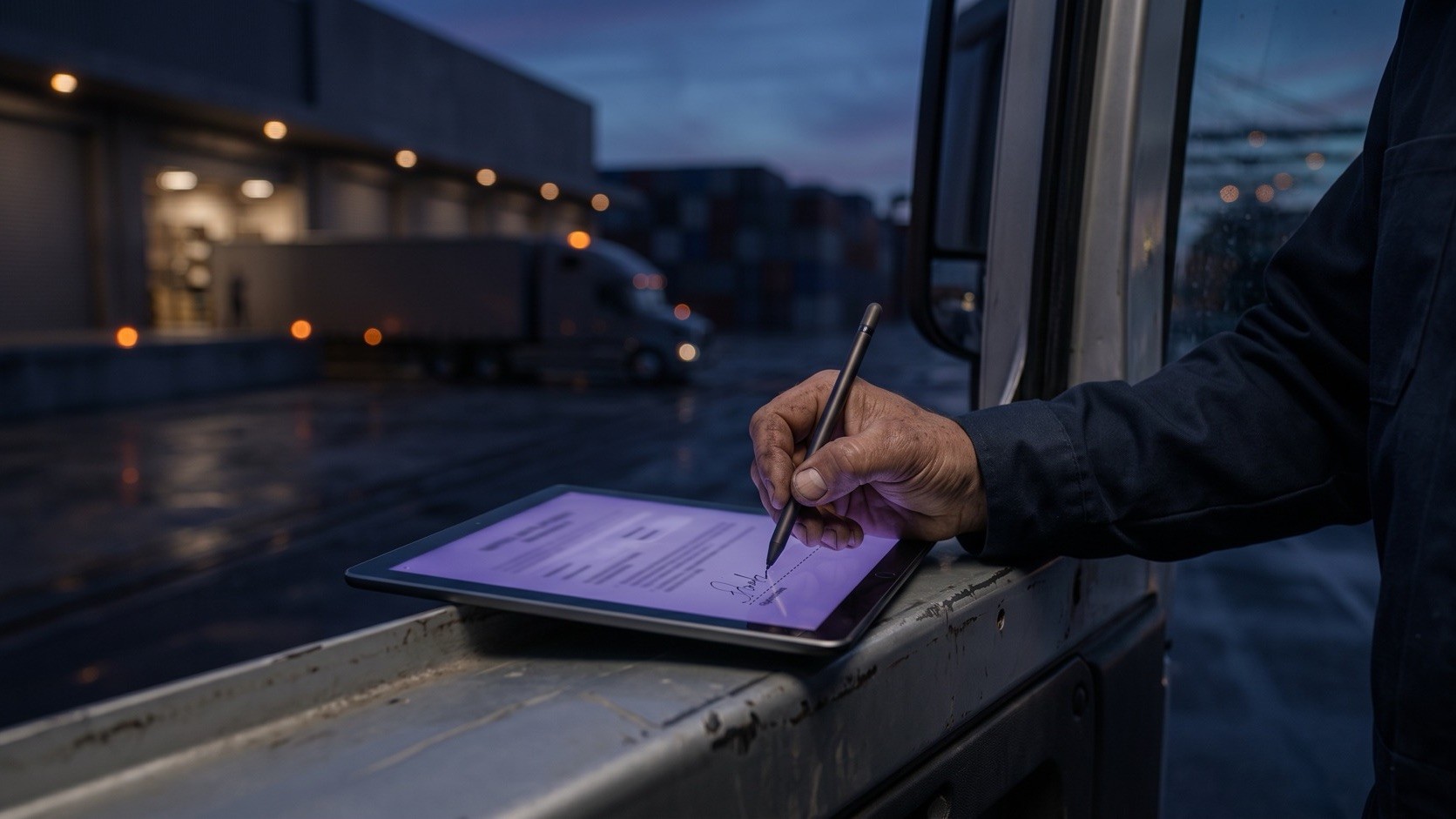
A bill of lading does not have to be paper. An electronic bill of lading carries the same information and can be signed on a phone or tablet. LTL carriers have been moving toward a shared electronic BOL standard, so the data reaches the carrier before the truck arrives and does not have to be typed again from a paper copy.
Whatever the format, keep the BOL, the rate confirmation and the signed delivery copy together with the load. That is one of the basic jobs of TMS software for freight brokers, and it is what makes an invoice or a claim quick to support.
See what an AI-native TMS looks like.
Book a demo