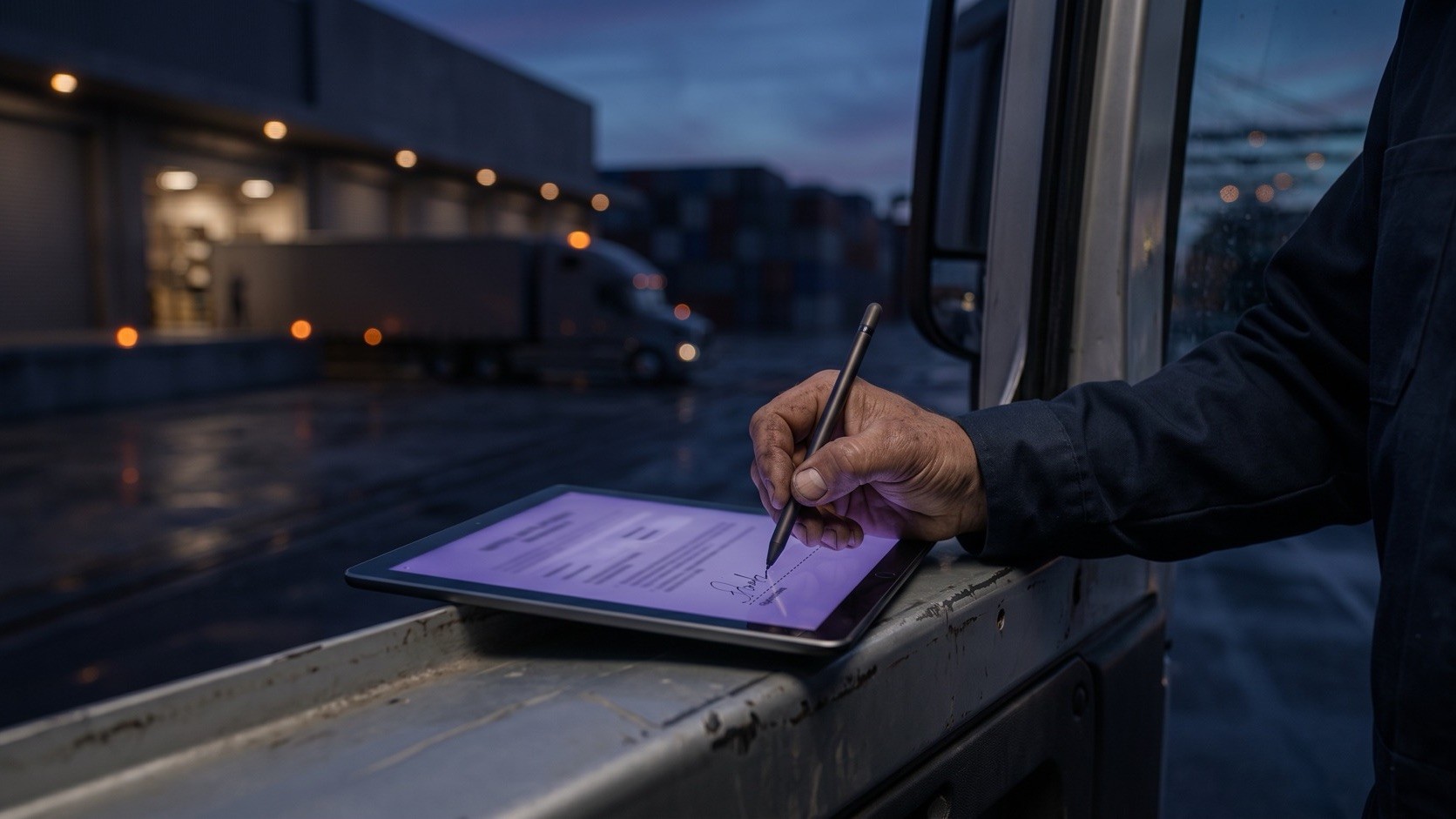
Drayage is the short truck move of a shipping container or freight between a port, rail ramp or other terminal and a nearby warehouse or distribution center. It is usually one leg of a longer intermodal move: the truck that brings a container out of the port, or takes it back in. The word also means the fee charged for that haul.
The name comes from the dray, a low, flat cart once used to haul goods short distances. Trade shows use “drayage” for something else again: moving exhibitors’ freight from the loading dock to the booth and back. This guide is about the freight meaning.
How drayage works
A typical import move looks like this:
The container comes off the ship and sits at the marine terminal.
A drayage carrier picks it up on a chassis, the wheeled frame with twist-locks that carries a container on the road.
The driver delivers it to the customer’s warehouse or distribution center, or to a rail ramp for the next leg.
Once it is unloaded, the empty container goes back to the terminal or an empty-return location.
Export moves run the other way: an empty out to the shipper, a loaded container back to the port.
Most of this happens within a short radius of the port or rail yard, which is why drayage is often called “short haul.” The Intermodal Association of North America (IANA) lists container lengths of 20, 40, 45, 48 and 53 feet. A high cube container is the same length and width as a standard one but a foot taller, at 9’6”.

Types of drayage
IANA lists six kinds of drayage:
Cross-town (inter-carrier): moving a container between two different railroads’ terminals.
IMX (intra-carrier): moving it between two hubs of the same carrier.
Pier: moving it between a rail hub and a port dock.
Shuttle: moving it from a hub to a nearby lot when the terminal is full.
Door-to-door: delivering it directly to the customer.
Expedited: a rush move, often to make a tight cut-off.
In everyday use you will also hear port drayage, meaning any container move in or out of a seaport, and intermodal drayage, meaning moves to and from rail ramps.
Drayage vs intermodal vs regular trucking
Drayage | Intermodal | Full truckload (OTR) | |
What it is | The truck leg at either end of a container move | The whole move across two or more modes (ship, rail, truck) | One truck from shipper to receiver |
Distance | Short, usually local to a port or rail yard | Long, door to door | Regional or long haul |
Equipment | Container on a chassis | Container or trailer on rail, plus drayage | Dry van, reefer, flatbed |
Typical paperwork | Container number, terminal, last free day, appointment | Rail and ocean bookings plus drayage | Bill of lading, rate confirmation |
So drayage is a part of intermodal, not a competitor to it. Compared with full truckload shipping, the miles are short but the timing is tighter, because terminals, appointments and free time drive the schedule.
Drayage costs and fees
A drayage rate starts with the move itself and is shaped by distance, fuel, how congested the terminal is and how long the driver waits. Then come the accessorials. We have not quoted dollar figures here because they change by port, carrier and month; ask carriers for their current rate sheet.
Charge | What it covers |
Chassis fee | Use of the chassis, usually per day |
Chassis split | Extra trip when the chassis is picked up or returned at a different location from the container |
Pre-pull | Pulling the container out of the terminal early and holding it at the carrier’s yard, usually to beat the last free day |
Storage | Yard storage after a pre-pull |
Waiting time | Driver time at the terminal or customer beyond the free period |
Overweight | Heavy containers that need a tri-axle chassis or a permit |
Hazmat | Hazardous materials handling and endorsements |
Per diem | Daily charge for keeping a carrier’s container or chassis |
Demurrage | Charge for a container left in the terminal past free time |
Detention | Charge for keeping the container or equipment out past free time |
On weight: the federal limit on the Interstate system is 80,000 lb gross, 20,000 lb on a single axle and 34,000 lb on a tandem. Some ports run permitted overweight corridors for heavier containers. The Port of Los Angeles, for example, allows up to 95,000 lb gross with a permit and lists tri-axle chassis for heavier 20-foot loads.
Demurrage vs detention
The two are easy to mix up. The Federal Maritime Commission (FMC) puts it this way: demurrage accrues when a container stays at the marine terminal past its free time; detention is charged for extended use of the carrier’s equipment outside the terminal. Some carriers call detention “per diem,” and wording varies between carriers.
FMC rules (46 CFR part 541) also set how these charges are billed:
The invoice must go out within 30 days of the date the charge was last incurred, or the billed party does not have to pay it.
The billed party gets at least 30 days to dispute the charge.
The invoice must show the container and bill of lading numbers, the free time and dates charged, the rate and its basis, and how to dispute it.
One part of that rule, the section on which parties may be billed, was set aside by a federal appeals court in September 2025 and removed by the FMC, so check the current rule and your contracts before relying on it.
For driver waiting time at a pickup or delivery, our free detention calculator works out detention pay from stop times, free time and an hourly rate.
How freight brokers handle drayage loads
Most drayage guides are written for shippers or carriers. If you are the broker in the middle, this is what has to be right before the truck rolls:
Container details: container number, steamship line, terminal and the booking or bill of lading number.
Last free day: when demurrage starts at the terminal, and when detention starts once the container leaves.
Appointment: many terminals require one. Note the time window, or whether the terminal works first come, first served.
Chassis: who supplies it and where it is picked up and returned.
Empty return: where the empty goes back, which may not be where it came from.
Weight and hazmat: gross weight, whether it needs a tri-axle chassis or a permit, and any hazmat requirements.
The carrier’s credentials: check its authority and insurance with a USDOT and MC number lookup, and follow our carrier vetting checklist. Drivers need a TWIC card for unescorted access to secure port areas, and intermodal carriers generally need to be signed up to the UIIA, the standard equipment interchange agreement administered by IANA, to pull equipment from ocean carriers and railroads.
The rate confirmation: list the line haul and every accessorial you have agreed in advance (chassis, pre-pull, storage, waiting time) so nothing surprises you on the invoice. Our guide to the rate confirmation covers what else belongs on it.
Ports also run their own truck rules. California ports, for example, require drayage trucks to meet the state’s drayage truck regulation, so confirm a carrier is cleared for the port you are booking.
Managing drayage in a TMS
Drayage loads have more moving parts than a standard truckload, so they are easier to run when they live in the same system as the rest of your freight. In Polt you can create a shipment with Drayage as the mode and Container as the equipment, set a stop’s appointment type to Port FCFS (first come, first served), and add drayage and detention as accessorial fees. Freight requirements you add to the shipment flow through to the rate confirmation sent to the carrier.
If you broker container freight, we can walk through a drayage load in Polt on a short call.
Broker container freight? See a drayage load run in Polt.
Book a demo